The oldest architecture in computing
When I talk to customers about AI, there’s one question that always seems to come up: “Will AI take my job?” My answer, “Maybe.” It’s an honest response that often catches people off-guard, but the answer is grounded in every technology shift since the Industrial Revolution. Some work will be automated, some job families will disappear, some industries will consolidate, some of the skills we have today will be commodities tomorrow.
If I reframe the question to “Will AI make me obsolete?”, my answer is, “No. Not if you evolve.” While we’re seeing incredible results from AI, it’s still just a tool. And as we’ve seen throughout history, staying relevant is tied to our ability to adapt, to use the tools at our disposal to build better and faster, and to solve harder problems.
I evolve by getting deep with new tools. I need time to do real work with them and confirm or disprove any initial skepticism. I need to develop honest opinions about what works and what doesn’t work. Over the past few weeks, I’ve been spending the time I set aside to learn with Kiro Crew, an open-source agent workspace we recently released. I use Kiro Crew agents to run research tasks, monitor my schedule, manage cron jobs, and help prepare me for meetings. One piece of this that has captured my attention is how Kiro Crew manages memory across multiple independent agents. How it decides what to keep and what to throw away. How it implicitly learns from our conversations. How the agents improve themselves over time.
This got me thinking about how we – people – store information. Back in 2023, I visited Cortical Labs, an Australian biotech startup that places lab-grown human neurons on silicon chips to use them as a computing substrate. I watched them use a network built on living neurons to play the game of Pong, and I was blown away. A single high-end GPU can draw 700 watts of power and needs hundreds of thousands of training iterations to learn to play Pong. The human brain draws 20 watts and only needs a handful of attempts to do the same.
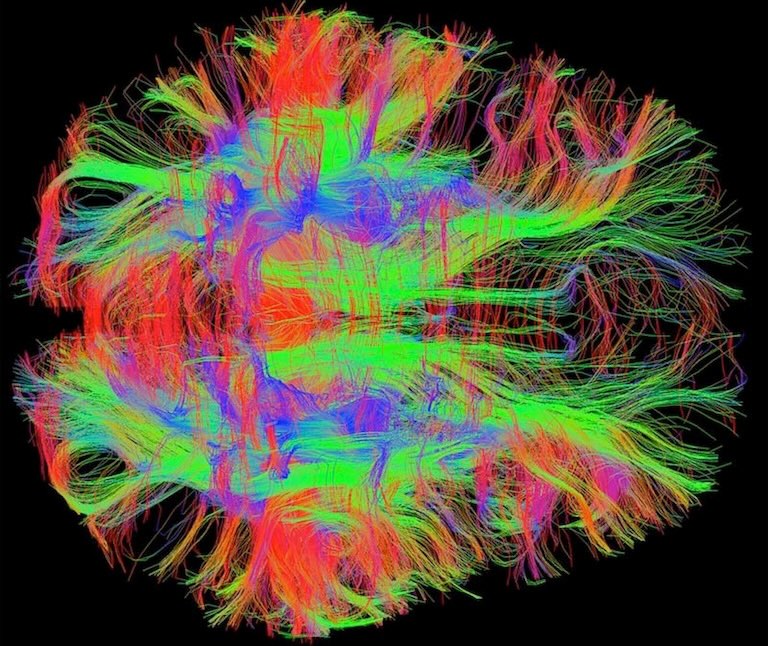
The concept of “memory” ties into some of the work I’ve been doing to prepare for my annual tech predictions. I’ve been reading the research of neuroscientist Jeff Hawkins – who also happens to be the creator of one of my all-time favorite pieces of technology, the PalmPilot. In A Thousand Brains: A New Theory of Intelligence, he suggests that the brain distributes knowledge across thousands of cortical columns, each of which learns its own model through direct sensory experience. Each column predicts what it will sense next and updates when the prediction is wrong. Memories consolidate in the background, during sleep, when raw experience is distilled into structured long-term knowledge. What repeats is strengthened. What does not repeat weakens.
The more I learn about how the brain works, the more people I find working hard at this very moment to find the answers. I’ve talked to computer scientists and chip designers and neuroscientists who are all reverse-engineering the brain from different angles and arriving at the same answers, which has led me to an observation: the brain is the oldest architecture in computing.
It is older than the Von Neumann architecture, older than the abacus, older than mathematics, older than language itself. Hundreds of millions of years of evolution produced structured memory, background consolidation, graceful decay, prediction, and learning from errors, all done at a fraction of the energy we use to approximate the same in silicon.
My journey into the internals of Kiro Crew gave me a concrete look at these principles in software. A small team of engineers built it by starting from practical engineering constraints, but the architecture they arrived at looks remarkably similar to the one evolution arrived at. It maintains several distinct memory types working together. In this case, memories are stored across markdown files, a local vector database, and a key-value index. Like the brain, some memories decay over time, so recall remains efficient. And, just as Hawkins posits how our brain works, consolidation of these memories runs in the background. Recent memories are kept in full detail, older ones compress, and the insignificant ones are pruned entirely. Without active forgetting, any system that accumulates experience will eventually spend more time sorting through old context than doing useful work.
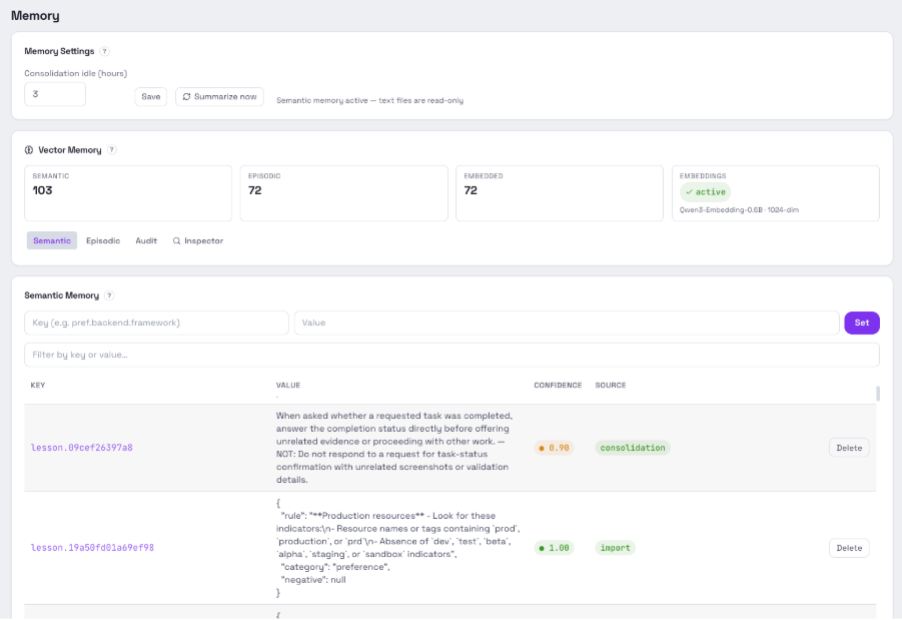
Memory enables something else that matters when I think about where agents are headed: trusted autonomy. The agents in Kiro Crew can run remotely around the clock. They can interact with each other, they can coordinate on tasks and generate reusable skills from patterns in your work. While doing my research on the brain, one of my agents suggested building a reading dashboard for me to track what I’d read and what I should read next. Agents that learn from you and remember your rules and preferences earn the trust to do much of the work unattended. I still review what they do and what tools they use to do it, but there’s a growing trust I’m finding with these agents that I have had trouble establishing with other tools that have come before them.
The oldest architecture in computing is still the best architecture in computing, and it always will be. Among the people building our next tools, the ones who spend the time thinking deeply about how the brain works will be the ones who make the biggest breakthroughs.
Now, go build.